Engineering Guides

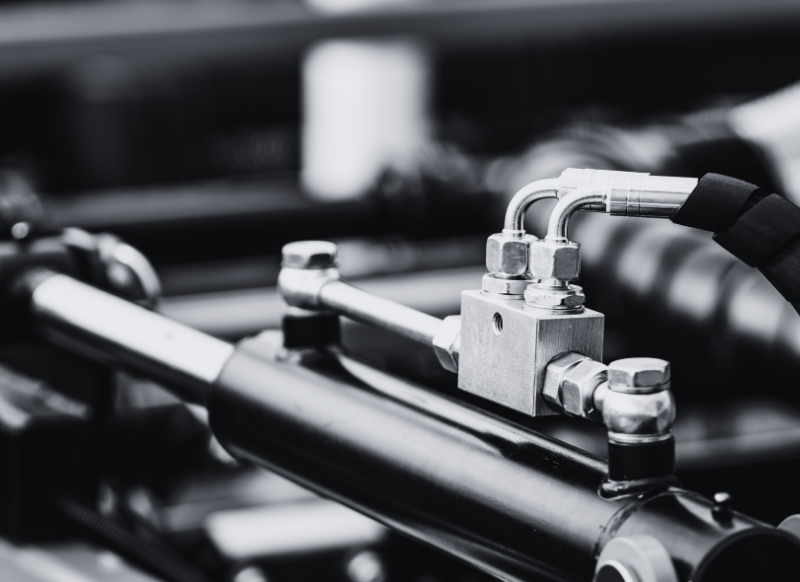
Hydraulic valve cutaway showing machined bore, spool lands, and sealing surfaces requiring tight tolerances

Machining for Hydraulic Systems: Bores, Spools, Sealing Surfaces & Functional Tolerances

Machining for Hydraulic Systems: Bores, Spools, Sealing Surfaces & Functional Tolerances Executive Summary Hydraulic systems demand a different level of machining discipline than general mechanical parts.Small geometric errors that would be harmless elsewhere can cause leakage, stick-slip motion, pressure loss, or rapid wear in hydraulic assemblies. Key points engineers should remember: Hydraulic performance depends on […]

Machining for Hydraulic Systems: Bores, Spools, Sealing Surfaces & Functional Tolerances Read More »
Comparison of in-house grinding versus outsourced grinding showing differences in cost, quality, and risk for precision machined parts.

In-House Grinding vs. Outsourcing: Cost, Quality, and Risk

In-House Grinding vs. Outsourcing: Cost, Quality, and Risk Executive Summary Grinding is not just a finishing step—it is a geometry-control operation.The decision to keep grinding in-house or outsource it affects tolerance capability, scrap risk, lead time, and total cost far more than most engineers expect. Key takeaways: Grinding becomes mandatory when turning or milling can’t

In-House Grinding vs. Outsourcing: Cost, Quality, and Risk Read More »

CNC Tolerances Explained How Tight Is Too Tight? A Practical Guide for Engineers​

CNC Tolerances Explained: How Tight Is Too Tight? A Practical Guide for Engineers

CNC Tolerances Explained: How Tight Is Too Tight? A Practical Guide for Engineers Executive Summary Tighter tolerances are not always better. They increase cost, reduce yield, and limit supplier options—often without improving function. Key points engineers should remember: Tolerance should follow function, not habit or legacy prints Every extra tenth adds cost exponentially, not linearly

CNC Tolerances Explained: How Tight Is Too Tight? A Practical Guide for Engineers Read More »

Examples of machining distortion such as bowed shafts, tapered bores, warped plates, and out-of-round journals.

How to Control Distortion in Machining: Heat Treat, Grinding & Process Planning

How to Control Distortion in Machining: Heat Treat, Grinding & Process Planning? Machining distortion is not random; it stems from mechanical, thermal, metallurgical, and clamping stresses revealed during machining or after heat treat. Heat treat is often the primary cause, with process sequence, stock removal, and re-chucking influencing straightness and cylindricity. Grinding and honing correct

How to Control Distortion in Machining: Heat Treat, Grinding & Process Planning Read More »