
Double Disc Grinding vs. Surface Grinding: Which Is Better for High-Volume Precision Parts?
Explore the differences in thickness control, flatness, parallelism, throughput, and production cost—and learn which process is better suited to your component.
Two Grinding Processes. Different Production Advantages.
When a precision component requires flat, parallel surfaces, selecting the correct grinding process can influence quality, manufacturing efficiency, and total cost per part.
Double disc grinding and conventional surface grinding both remove material using abrasive wheels. However, they approach the workpiece differently.
Double disc grinding processes two opposing faces simultaneously, while conventional surface grinding typically finishes one primary face at a time.
For high-volume production, this distinction can be important. The right choice also depends on geometry, material, tolerances, and quantity.
For Suitable High-Volume Parts, Double Disc Grinding Often Has the Advantage.
When a component requires controlled thickness and parallel opposing faces, double disc grinding can provide an efficient production solution. Conventional surface grinding remains valuable for irregular geometries, smaller batches, and one-sided finishing.
Well suited to repeatable production of thickness-critical components with two accessible opposing faces.
Useful for flexible, targeted finishing, unusual geometries, and lower-volume work.
What Is Double Disc Grinding?
Double disc grinding is a precision manufacturing process that removes material from two opposing faces of a workpiece simultaneously.
This approach is particularly useful when a component requires repeatable overall thickness, controlled flatness, and parallel opposing surfaces.
Typical Applications
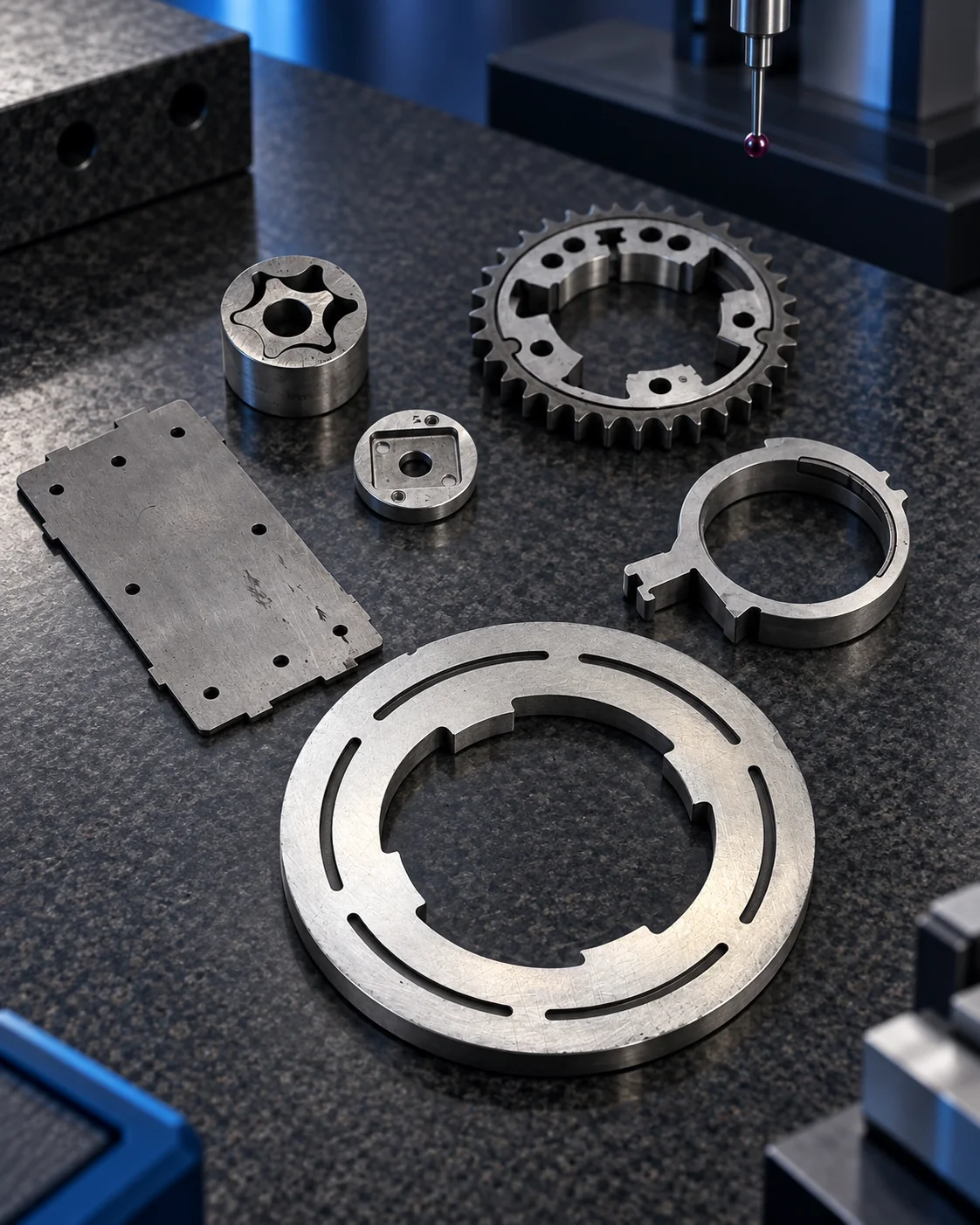
- Washers, spacers, and precision discs
- Gears and gear blanks
- Bearing-related components
- Powder metal components
- Automotive and industrial production parts
What Is Conventional Surface Grinding?
Conventional surface grinding generally uses a rotating abrasive wheel to finish one primary workpiece surface at a time.
The process can establish flat surfaces, refine dimensions, and achieve specified surface finishes. When both opposing faces require grinding, the workpiece may need to be repositioned for an additional operation.
Varied Part Geometry
Suitable for many components that do not fit a double disc grinding configuration.
Single-Face Work
Useful when one specific surface requires precision finishing.
Smaller Batches
Practical for varied jobs, lower quantities, and flexible production setups.
Double Disc Grinding vs. Surface Grinding
The most useful comparison focuses on the component's functional requirements and expected production quantity.
| Factor | Double Disc Grinding | Surface Grinding |
|---|---|---|
| Faces Processed | Two opposing faces simultaneously | Usually one primary face at a time |
| Thickness Control | Strong fit for thickness-critical components | May require additional setups for both faces |
| Parallelism | Well suited to opposing-face control | Depends on fixturing and successive operations |
| Flatness | Controlled flatness on compatible parts | Controlled flatness across varied applications |
| Throughput | Often advantageous in high-volume production | May require more handling for two-sided work |
| Geometry | Requires compatible opposing-face geometry | Often more flexible for irregular components |
| Best-Fit Production | Repeatable, thickness-critical components | Flexible or targeted finishing applications |
Neither process is universally better. Material, geometry, tolerances, production quantity, and inspection requirements determine the best approach.
Why Flatness, Parallelism & Thickness Matter
Precision parts must meet more than a single thickness dimension. The relationship between surfaces can affect fit, contact, assembly, and functional performance.
- Thickness: Distance between specified opposing faces.
- Flatness: Deviation from an ideal plane.
- Parallelism: Orientation relative to a datum.
- Surface Finish: Required surface texture.
A suitable inspection strategy is essential for verifying these requirements throughout production.
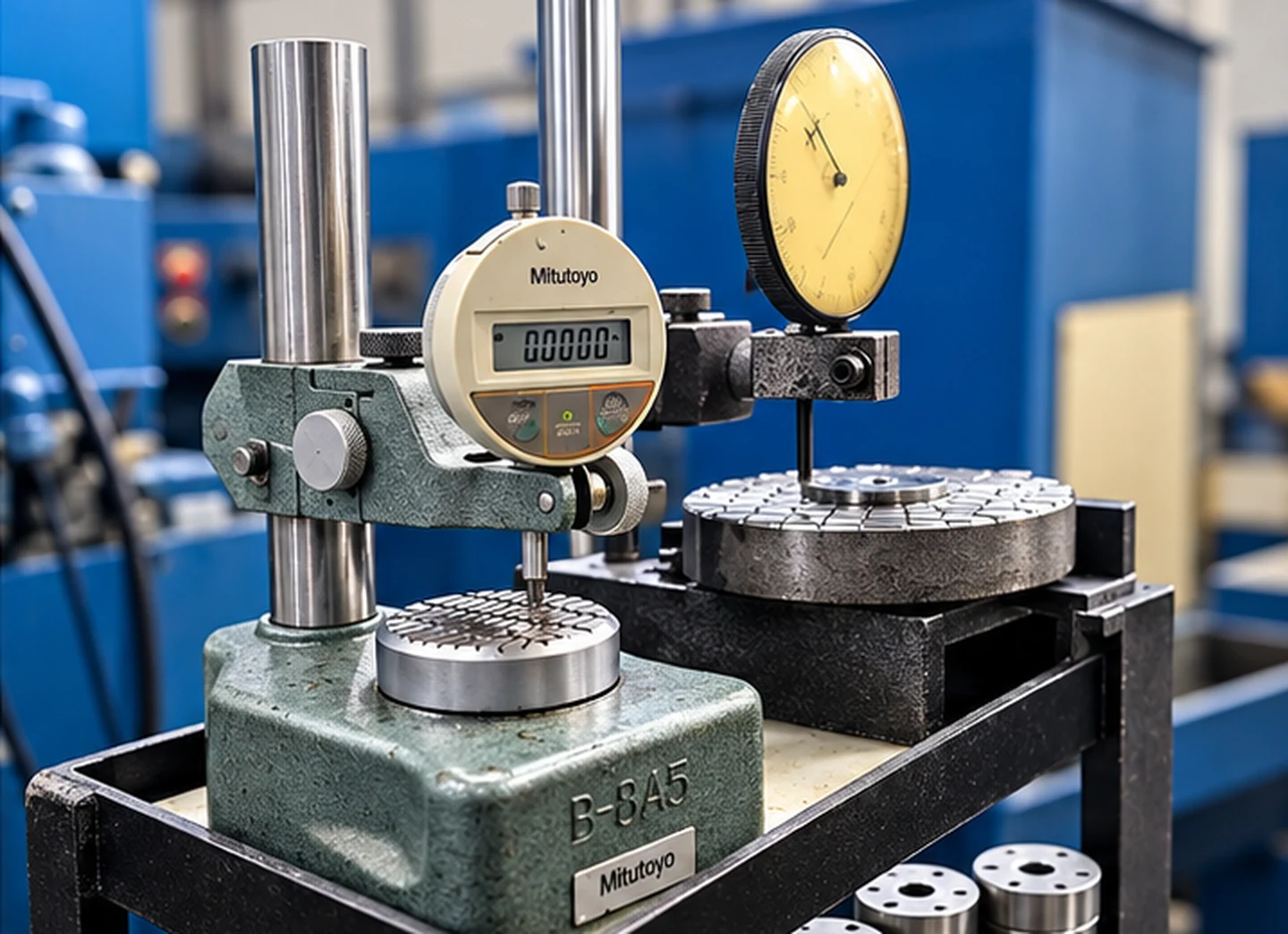
Inspection Is Part of the Manufacturing Process
Producing an acceptable first part is only one part of the challenge. High-volume production also requires consistent results across repeated manufacturing cycles.
Grinding, workholding, measurement methods, and production controls should work together to meet drawing requirements.
When Does Double Disc Grinding Make Economic Sense?
For high-volume manufacturing, the important metric is total cost per accepted part—not machine time alone.
Annual Quantity
Recurring quantities can justify dedicated setup and production tooling.
Stock Condition
Hardness, incoming thickness, and stock allowance influence grinding.
Part Presentation
Feeding, orientation, and unloading affect production throughput.
Accepted-Part Yield
Repeatable dimensional results help reduce scrap and rework.
Fixturing
Complex shapes may require specialized workholding or handling.
Downstream Operations
Inspection, washing, packing, and shipping affect total project cost.
From Precision Grinding to Production-Ready Parts
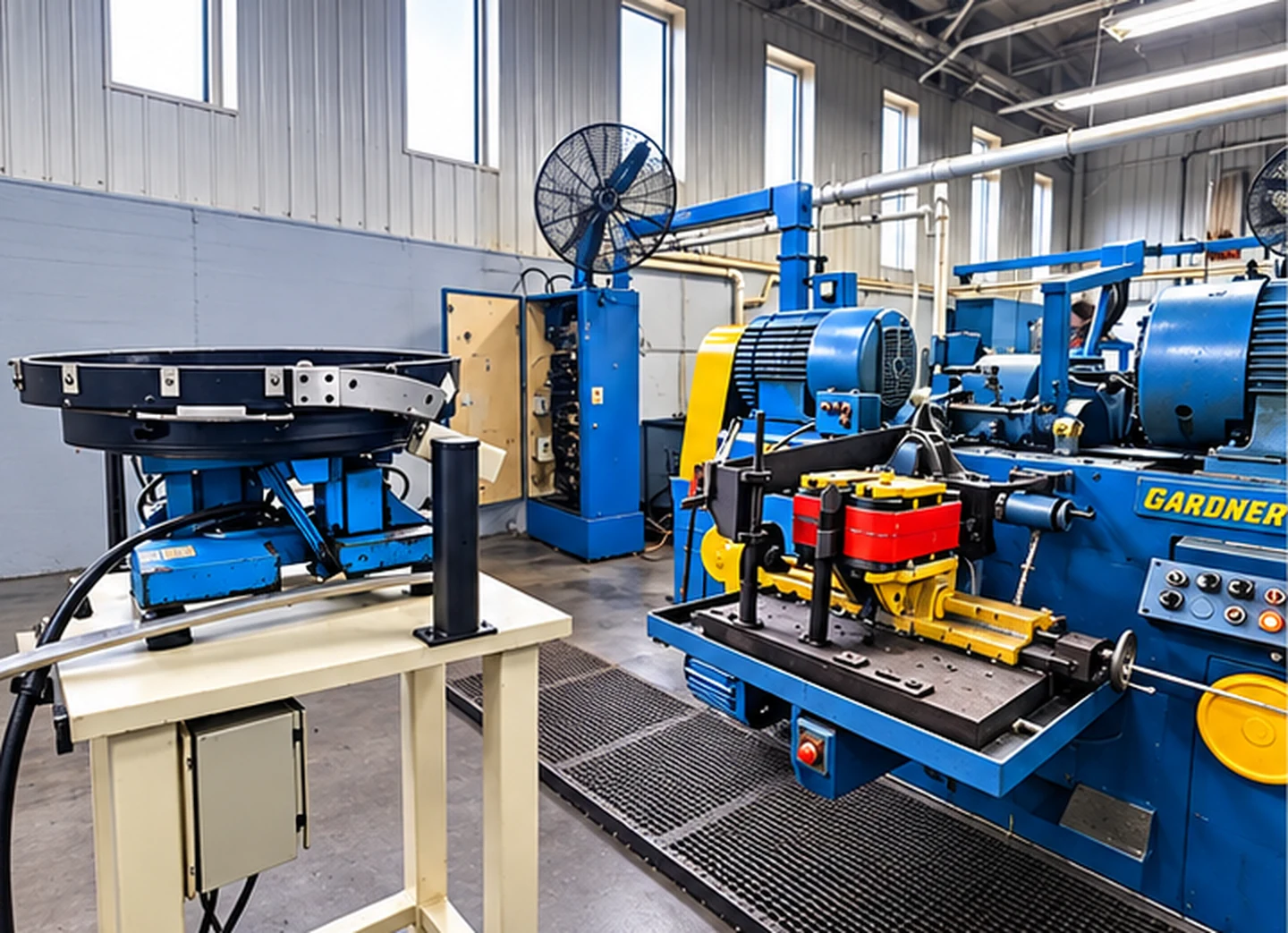
Baxter's production workflow extends beyond the grinding operation. These photographs show grinding equipment, dimensional inspection, post-grinding washing, and packing activities at Baxter Machine's facility.
Precision Grinding
Production equipment used to process precision components.
Dimensional Inspection
Measurement activities supporting production quality requirements.
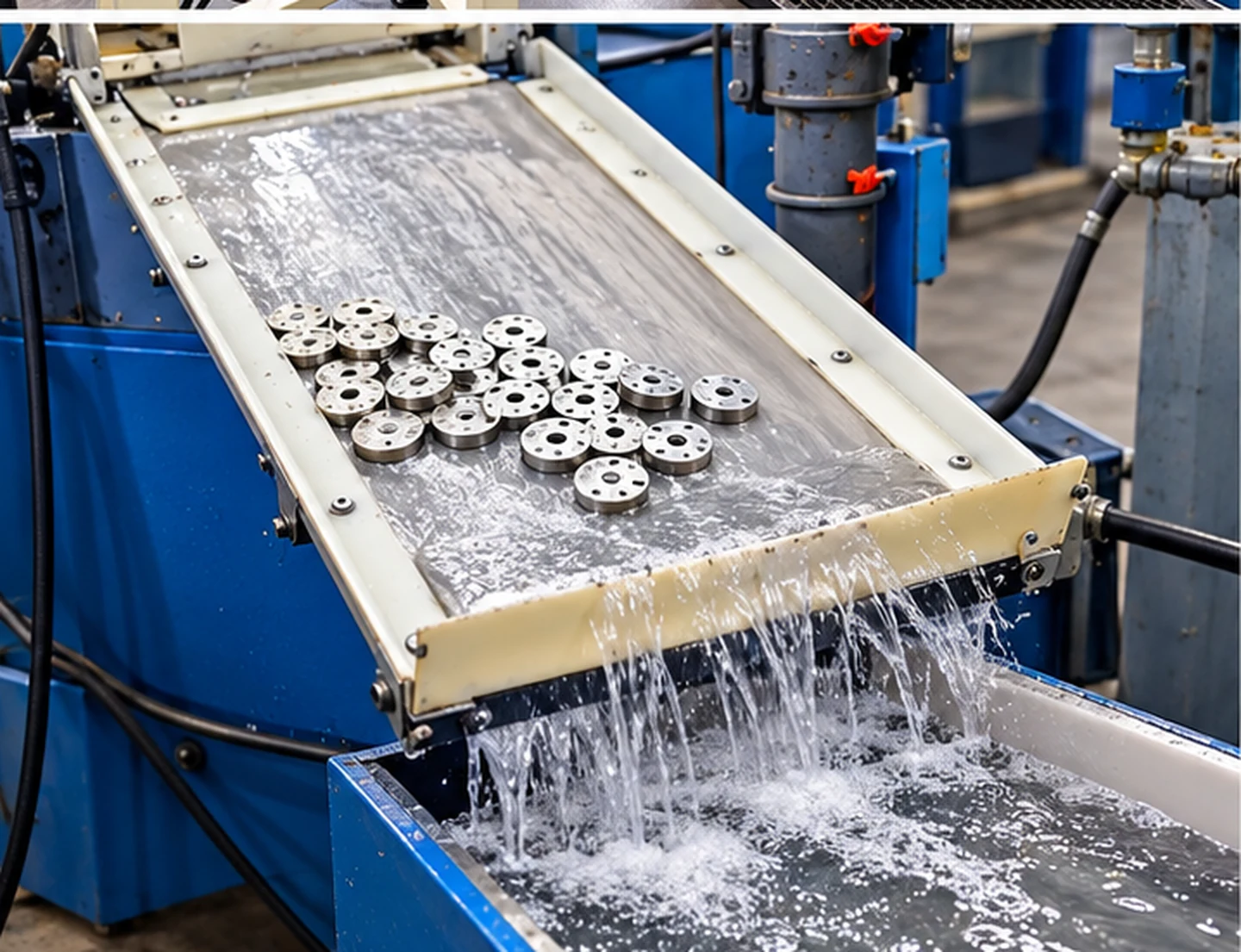
Post-Grinding Washing
Cleaning equipment used during production handling.
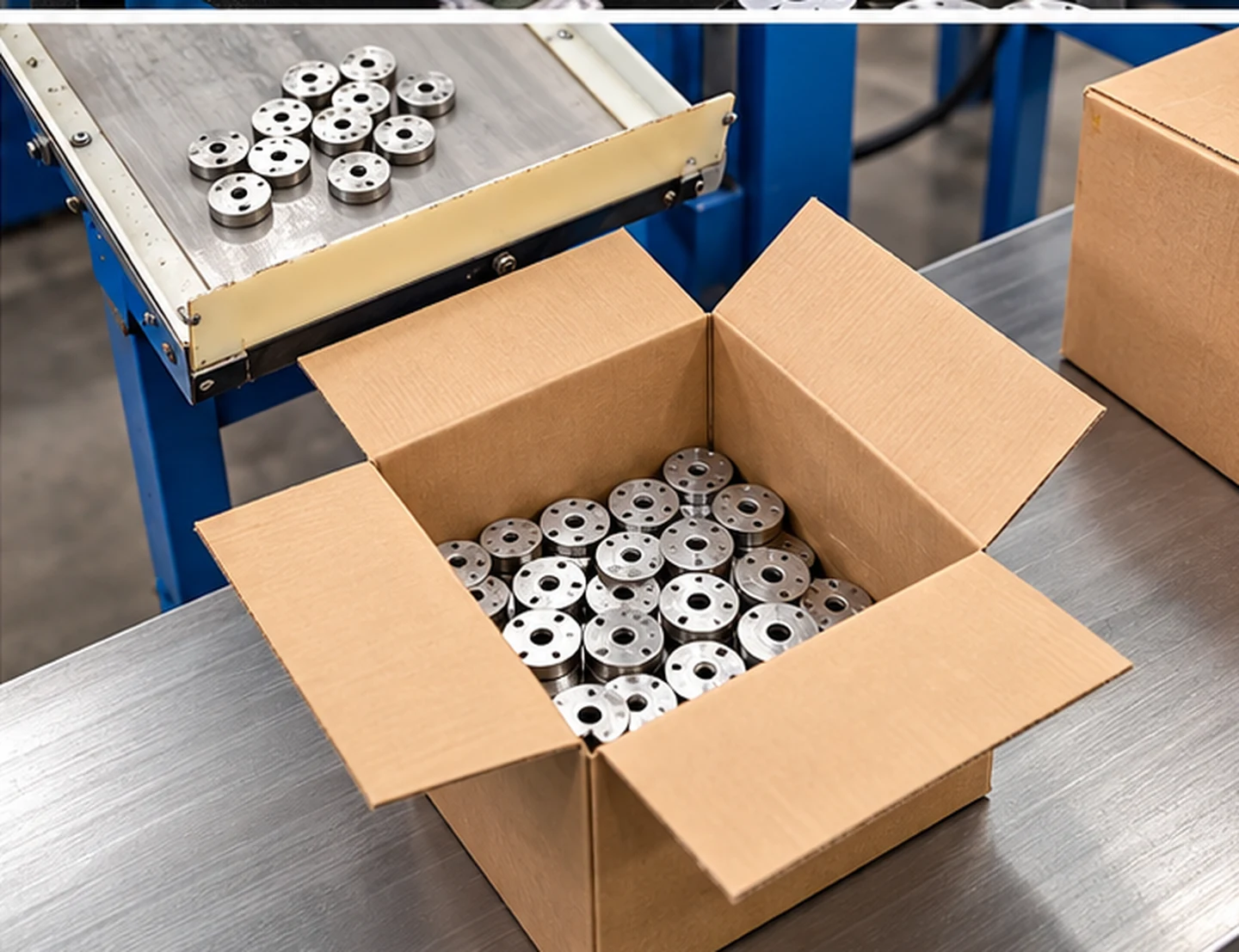
Parts Packing
Finished components prepared for shipment and delivery.
Specific inspection, cleaning, and packing requirements are established according to the application.
Which Grinding Process Should You Choose?
Choose Double Disc Grinding When…
- Two opposing faces require precision finishing.
- Thickness and parallelism are critical.
- Geometry is compatible with the process.
- High annual volume or repeat production is expected.
- Reduced handling could improve efficiency.
Consider Surface Grinding When…
- Only one surface requires finishing.
- The part has unusual geometry.
- Production quantities are relatively small.
- Flexible fixturing is important.
- Targeted material removal is required.
Share your drawing, material, required dimensions, tolerances, and expected volume. Baxter Machine can review the application.
What Should You Send a Grinding Supplier?
A complete RFQ helps the manufacturing team evaluate process suitability, tooling, inspection needs, and production economics.
- Part drawing and revision
- Material and hardness
- Incoming blank condition
- Required thickness and tolerances
- Flatness and parallelism requirements
- Surface finish specifications
- Estimated annual volume
- Lot quantities and delivery expectations
- Cleaning and packaging requirements
Double Disc Grinding FAQs
What Is the Main Difference Between Double Disc and Surface Grinding?
Double disc grinding processes two opposing faces simultaneously. Conventional surface grinding generally finishes one primary surface at a time.
Is Double Disc Grinding Better for High-Volume Manufacturing?
It often can be for suitable geometries. Two-sided processing and production-oriented feeding may improve throughput and reduce handling. Actual economics depend on the part.
Can Double Disc Grinding Improve Flatness and Parallelism?
Double disc grinding is commonly used to establish controlled thickness, flatness, and parallel opposing faces. Achievable results depend on the part and process conditions.
Which Components Are Suitable for Double Disc Grinding?
Common candidates include washers, spacers, discs, gear blanks, bearing-related components, and selected powder metal parts.
When Is Conventional Surface Grinding Preferable?
It may be preferable for one-sided finishing, irregular geometries, smaller production batches, or flexible workholding requirements.
What Information Is Needed for a Grinding Quote?
Provide a drawing, material, critical dimensions, tolerances, surface finish, quantities, and relevant inspection, cleaning, or packaging specifications.
Need a Precision Grinding Partner?
Baxter Machine supports production-focused grinding applications. Share your requirements so the team can evaluate your component and discuss the appropriate manufacturing approach.
Detailed RFQ Form
Ideal when you have drawings, material specifications, tolerances, and production quantities available.
More complete information helps reduce follow-up questions and supports a faster, more accurate quote.
Submit Detailed RFQ →Short RFQ Form
Prefer to start with a simpler request? Use the short form to begin the conversation.
Quick to submit, but additional information may be required and quoting may take longer.
Submit Short RFQ →